Then vs. Now: Historical Listings, Pt. 5
It's time for another round-up of our social media series, Fun Fact Friday!
Over the last several months, we have been delving into the history of some of our listings across Northern Indiana. Our brokers have listed industrial spaces, flower shops, mixed-use dwellings, and office buildings, each with its own fascinating history and connection to the city. Once we've done our research, we share those stories with the community in our "Fun Fact Friday" social media series.
We'd like to thank the Allen County Public Library, Columbia City Connect, Fremont Public Library, local newspapers, and many others for providing photos and research information, and joining us in sharing these memories for all to enjoy.
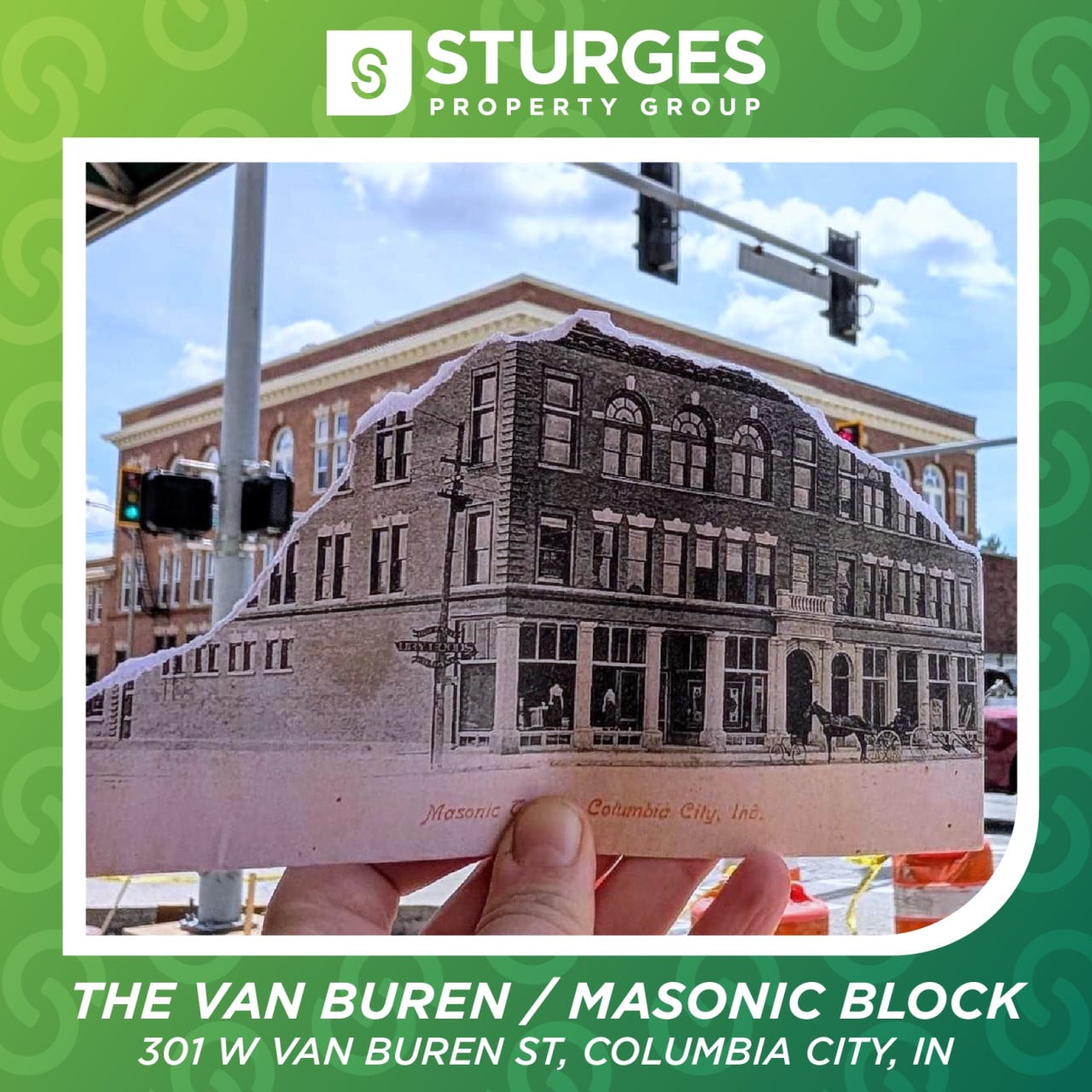
The Former Masonic Block in Columbia City
Let's head to downtown Columbia City at 301 West Van Buren Street, a site that has been tied to the Freemasons since its construction.
The Whitley County Masons have been around since 1856. Their earliest meetings took place in the back of Reider's Grocery Store, which was caddy-corner across the intersection from The Van Buren in the Raupfer Building.
The Masons didn't stay in grocery backrooms forever. Under the guidance of Thomas R. Marshall (the former governor of Indiana and US Vice President under Woodrow Wilson), the group commissioned Benjamin Raupfer to build them a permanent home.
In 1904, they built The Van Buren for just $30,000! This neoclassic building features glazed brick, jack-arched windows, a dentilled modillion cornice, and stone columns.
Raupfer owned the west side of the building, which once housed a farm equipment shop, a National Guard armory, and the Modern Woodsmen, a fraternal life insurance group.
The Masonic Temple claimed the east side, where the top floor served as their lodge. The second floor had dining spaces, a kitchen, and even office suites that were rented out to early 20th-century doctors and dentists.
The first floor of The Van Buren has always been a business hub. Throughout the years, it has housed Hudson Dry Goods (seen in the historic photo), HJ Schrader & Co, a furniture store, and a rec center.
The cornerstone was laid on June 21, A.L. 5904. No, the construction didn't involve time travel! "A.L.", or "Anno Lucis", follows the Masonic ceremonial calendar, which is A.D. 1904 on a standard calendar. That makes this building over 120 years old!
You can still view the cornerstone's futuristic date in person at the corner of Van Buren and Line Streets!
In recent years, this building has been home to The Van Buren Event Center, a beautiful venue with a banquet room and event suites. Soon, 1897 BBQ will call the ground level home as they relocate into this bigger space.
(The building was sold in December 2025 by Sturges Property Group brokers, Andrew Eckert & John Caffray.)
(Historical image credit to the Whitley County Historical Society / Columbia City Connect)
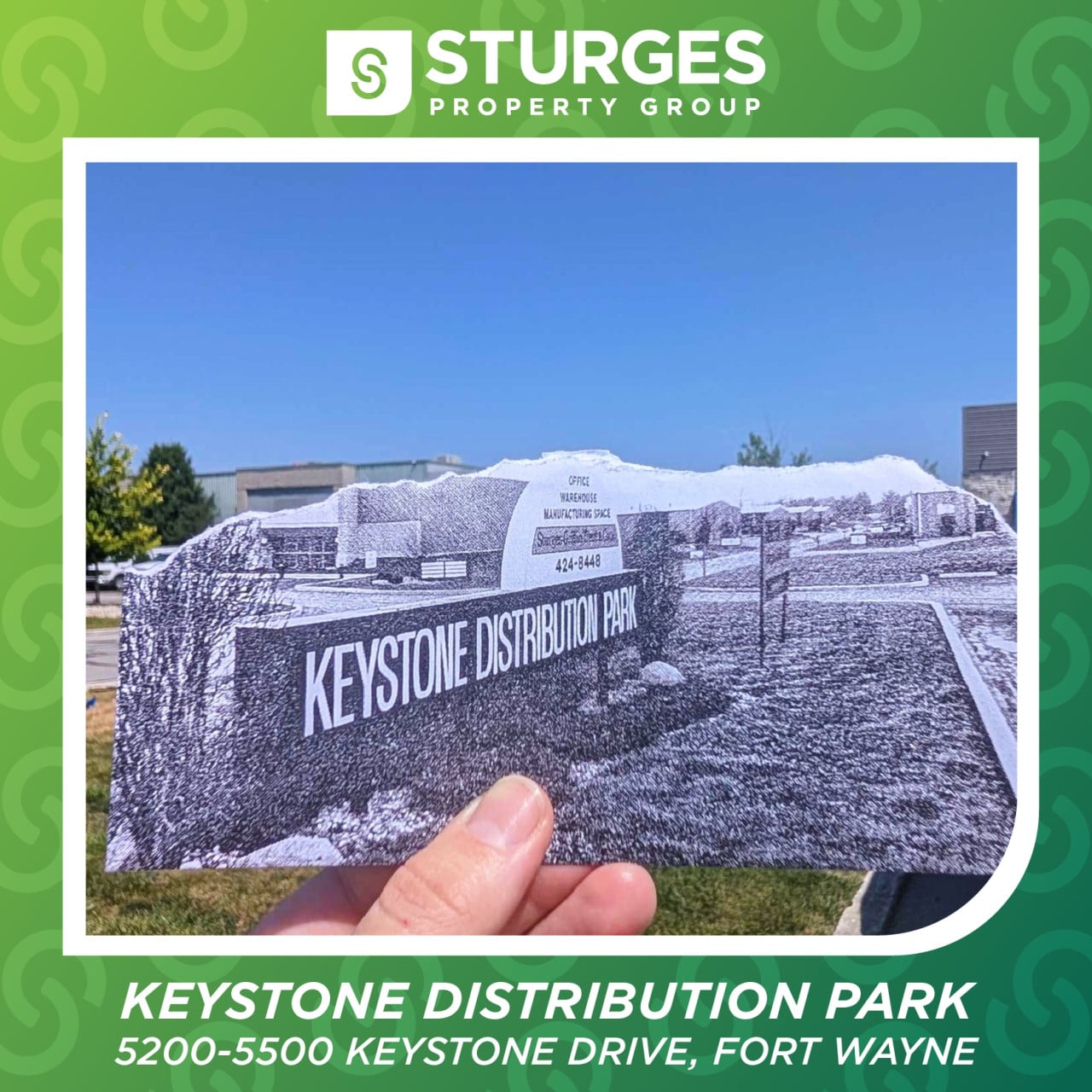
The Development of Keystone Distribution Park
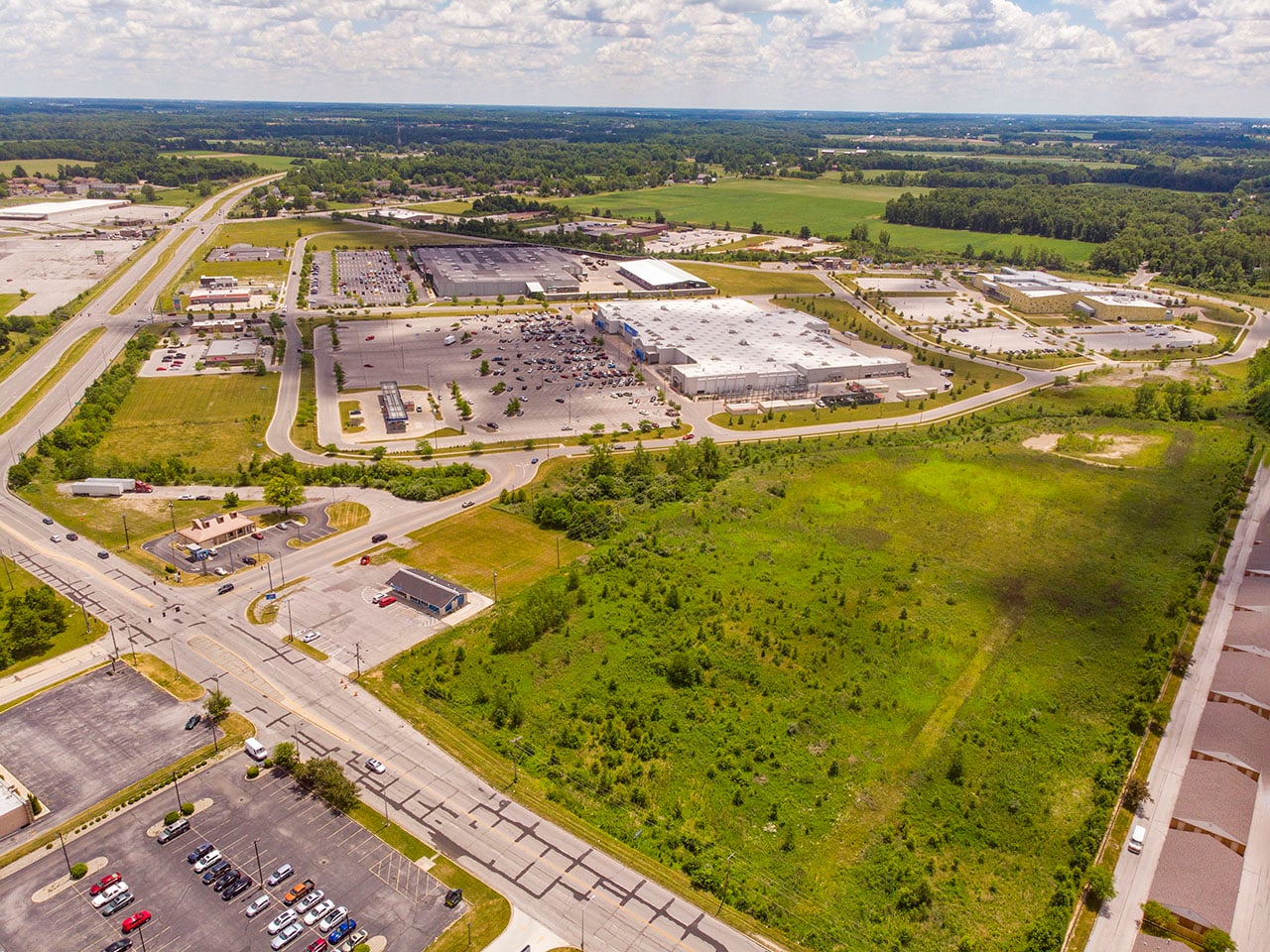
Keystone Distribution Park (also known as Keystone Industrial Park) is one of Fort Wayne’s long-standing industrial developments.
Sturges Property Group has been involved with Keystone since nearly the beginning! In the late 1970s, Sturges, Griffin, Trent & Co. purchased the original three buildings on Keystone Drive. Back then, the other eight buildings didn’t even exist yet.
As years passed, founder and CEO Barry Sturges continued developing what would eventually become the full Keystone Industrial Park we know today.
Back in 1998, when expansion plans were underway, the team used several code names for the project, including Primark Industrial Park, Pinnacle North, Concorde Industrial Park, and Benchmark Business Park, just to name a few!
Eventually, the project moved forward as an expansion of Keystone. Plans were submitted to the City Planning Commission under the code name "Northspire Park".
Throughout the decades, Keystone has provided quality industrial space, exceptional service, and consistent returns for its owners. This industrial park is also truly a team effort, as every affiliate of Sturges Property Group plays a part:
- Sturges Property Group handles leasing and management
- Maintenance Management takes care of property upkeep
- Nexus Technology Partners manages the security systems
- TI Source Project Management handles buildouts and spec building construction
Today, Keystone Distribution Park remains a thriving industrial hub with room for continued growth. We are glad to have been so involved in the growth of Keystone and Fort Wayne as a whole.
The newest building, Building 11, was completed in the winter of 2026 and currently has 15,000 SF available for lease. You can contact our brokers, Neal Bowman and Philip Hagee, today for more information on leasing in Keystone!
(Historic image courtesy of Sturges Property Group's archives, a Sturges, Griffin, Trent Prospectus brochure, 1996.)
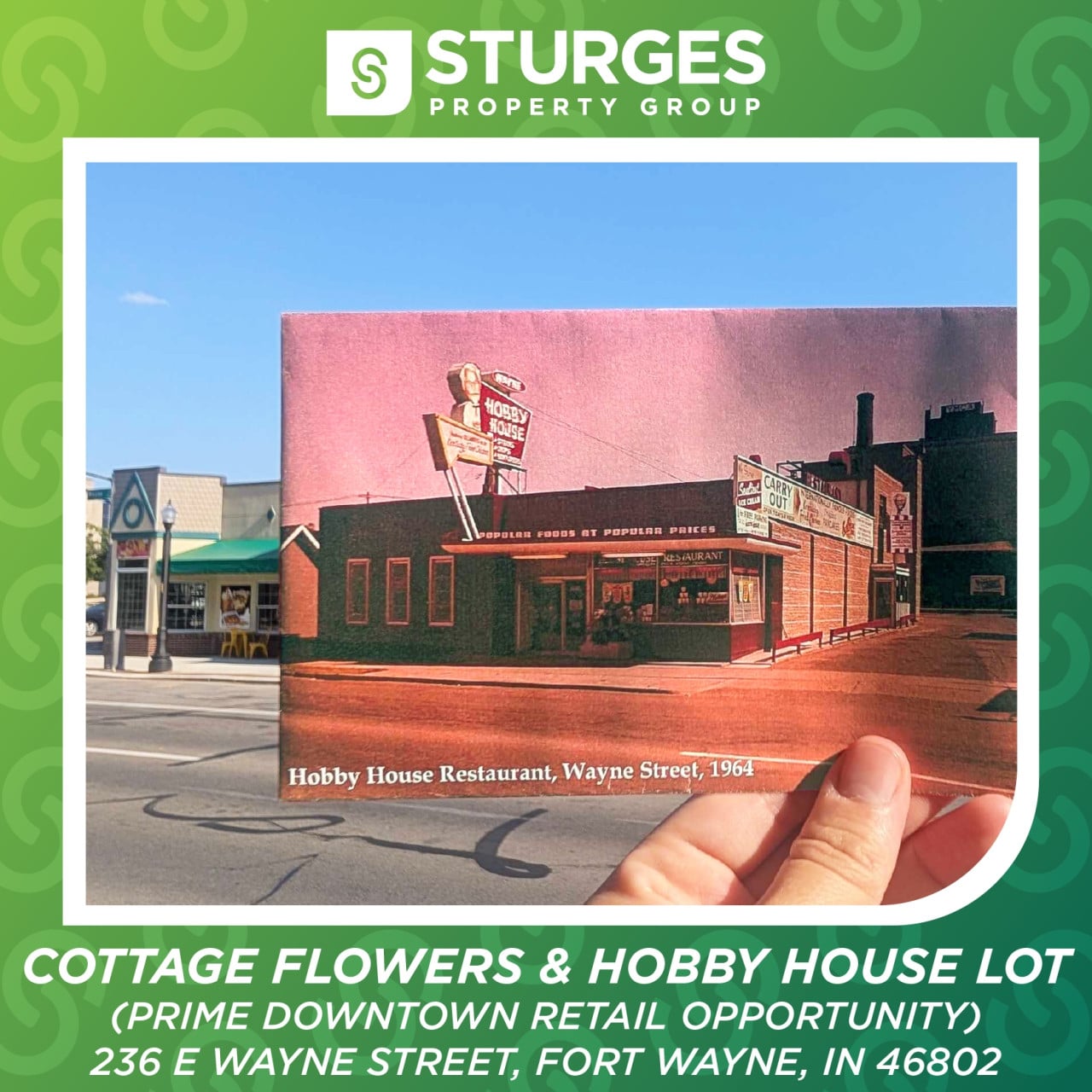
The Former Hobby House Restaurant, now Cottage Flowers
The corner of Wayne and Barr Street in downtown Fort Wayne has been home to not one but TWO iconic Fort Wayne businesses over the years, and has also seen quite a bit of change.
In the 1930s and early 40s, the corner was home to several fruit stands and flower shops, like Albert Moore Fruits and Mallison’s Flower Mart, foreshadowing prominent businesses to come.
In 1946, Bob and Eva Schowe founded Cottage Flowers. Their little cottage shop across from the Barr Street Market quickly became a well-loved florist, serving the community with flowers, plants, and gifts.
Just a few years later, in 1948, Phil Clauss opened the Hobby House Restaurant right next door to Cottage Flowers at 230 E Wayne Street, a building and address that no longer exists. The Hobby House became one of downtown’s go-to spots and is shown in the historic image above.
One of Hobby House’s most famous employees was the one and only Dave Thomas, who first got his start bussing tables before working his way up to becoming the founder of the beloved burger chain, Wendy’s.
Several locals remember ordering carry-out at the Wayne Street Hobby House side window, where Thomas would take orders and cook the food. Customers could get classics like a Big-Boy Cheeseburger for 50¢, French Fried Scallops for $1.50, or a Peach Melba Sundae for 40¢.
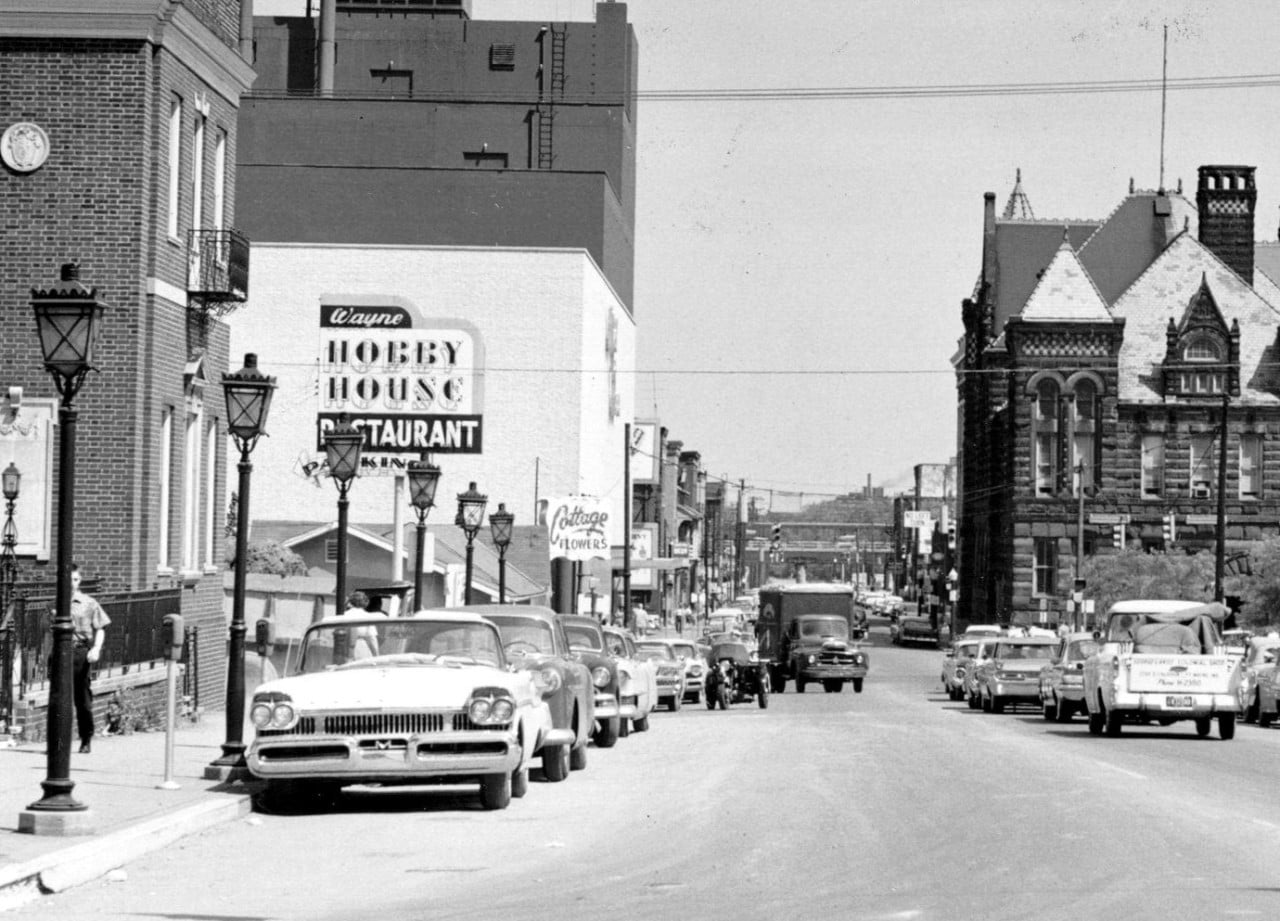
The Hobby House was also one of the first restaurants ever to serve KFC, and Thomas eventually helped manage some of the chain’s earliest franchises. If you look closely at the above color photo, you'll see the likeness of Col. Sanders on the Hobby House sign.
This Hobby House location closed in 1999 due to a decline in business. Soon after, Cottage Flowers expanded their footprint, taking over the restaurant's lot. With façade upgrades and interior renovations complete, the corner flower shop we know and love officially bloomed.
In more recent years, Cottage Flowers has welcomed small eateries inside. The latest addition is Eggster Café, which started at the YLNI Farmers Market in 2022 and officially opened inside Cottage Flowers in May 2025.
From fruit stands in the 1930s to a thriving flower shop and café today, 236 E Wayne Street has been part of downtown Fort Wayne’s story for nearly a century, and Cottage Flowers remains a cherished local staple.
(This building was sold in 2025 with help from Sturges Property Group brokers Andrew Eckert and John Caffray.)
(Historic images courtesy of The History Center and Allen County Public Library.)
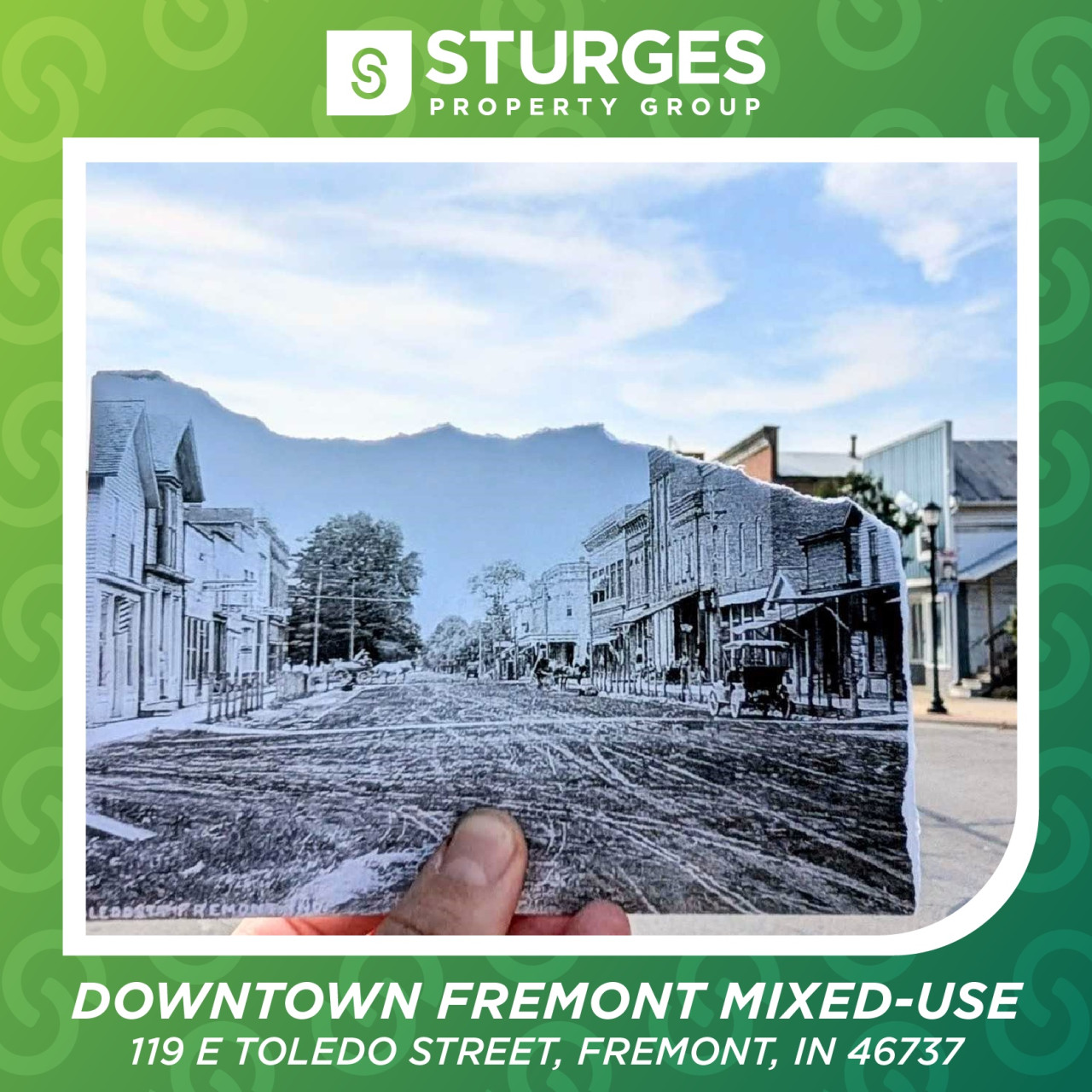
Commercial District of Fremont, Indiana
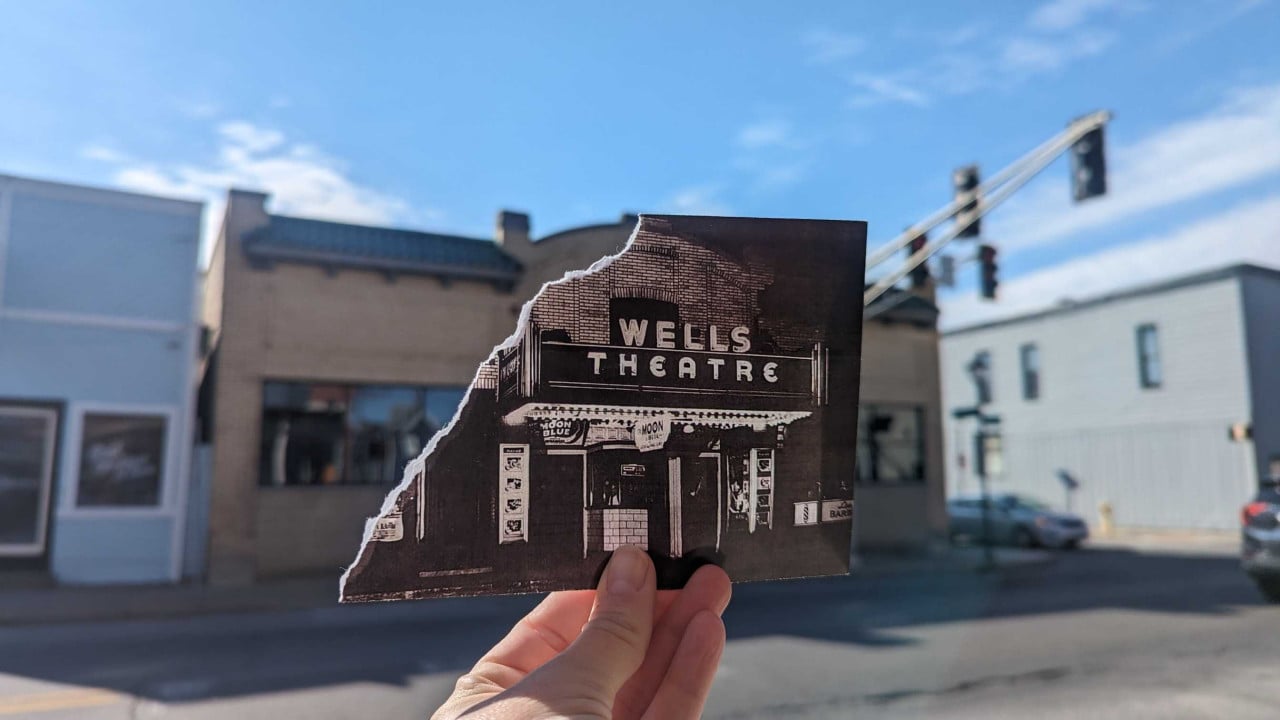
We head up north to Fremont, Indiana, for this Fun Fact Friday post, specifically to 119 East Toledo Street, which is visible on the right edge of our historic line-up photo above.
Early records suggest this now two-story, blue-facade commercial building could date back to the 1860s. However, it has gone through so many changes over the years that it's officially listed as a "non-contributing" historic property by ARCH.
In other words, the building is old, but its historic character has been altered too much to qualify for the National Register. But fear not! We were still able to uncover some fun facts about this building and street.
An 1895 Sanborn Fire Insurance map indicates a jewelry store here, possibly operated by F.A. Fallett, the only jeweler listed in the 1897 directory. By 1914, the building was home to a doctor's office, according to another fire insurance map.
Other photos suggest that this building may have been a convenience store or liquor store sometime in the 1940s-1960s.
Fast forward to the 2000s, when businesses like Hot Heads Salon, H&R Block, and various chiropractors called 119 East Toledo Street home. Now it is a mixed-use building with retail stores on the ground level and apartments above.
This building is just one piece of Fremont's long history. The town itself was first settled in 1834 as Willow Prairie, later renamed Brockville, and finally became Fremont in 1848, after General John C. Fremont, "The Great Pathfinder," a distinguished military officer and explorer.
Fremont, Indiana, was also part of the Underground Railroad during the Civil War, and by the late 1800s, it had both street lamps and electric lights installed around town.
The historic photo above shows a time before Toledo Street was paved, which didn't happen until 1920. The paved road through town was considered one of Fremont's greatest improvements at the time.
119 East Toledo Street also sits on the historic Vistula Trail, a Native American trading route that ran from Pittsburgh to Green Bay and later became a military road. Today, it is known as State Road 120.
From jewelry to doctors to salons, 119 East Toledo Street has seen its fair share of changes. Today, it's ready for a new owner, so contact Ian Smith for information today!
(Historic photo courtesy of the Fremont Public Library.)
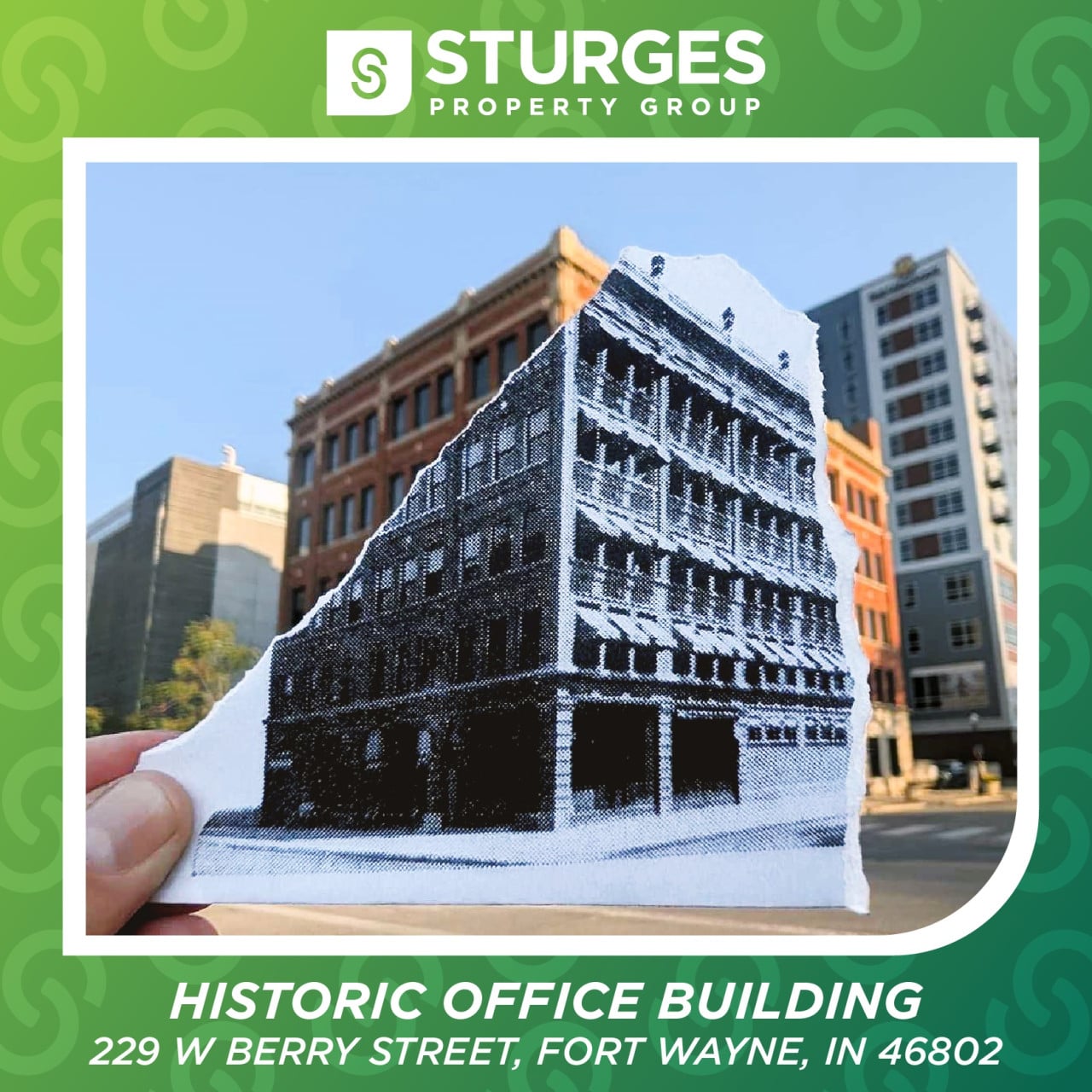
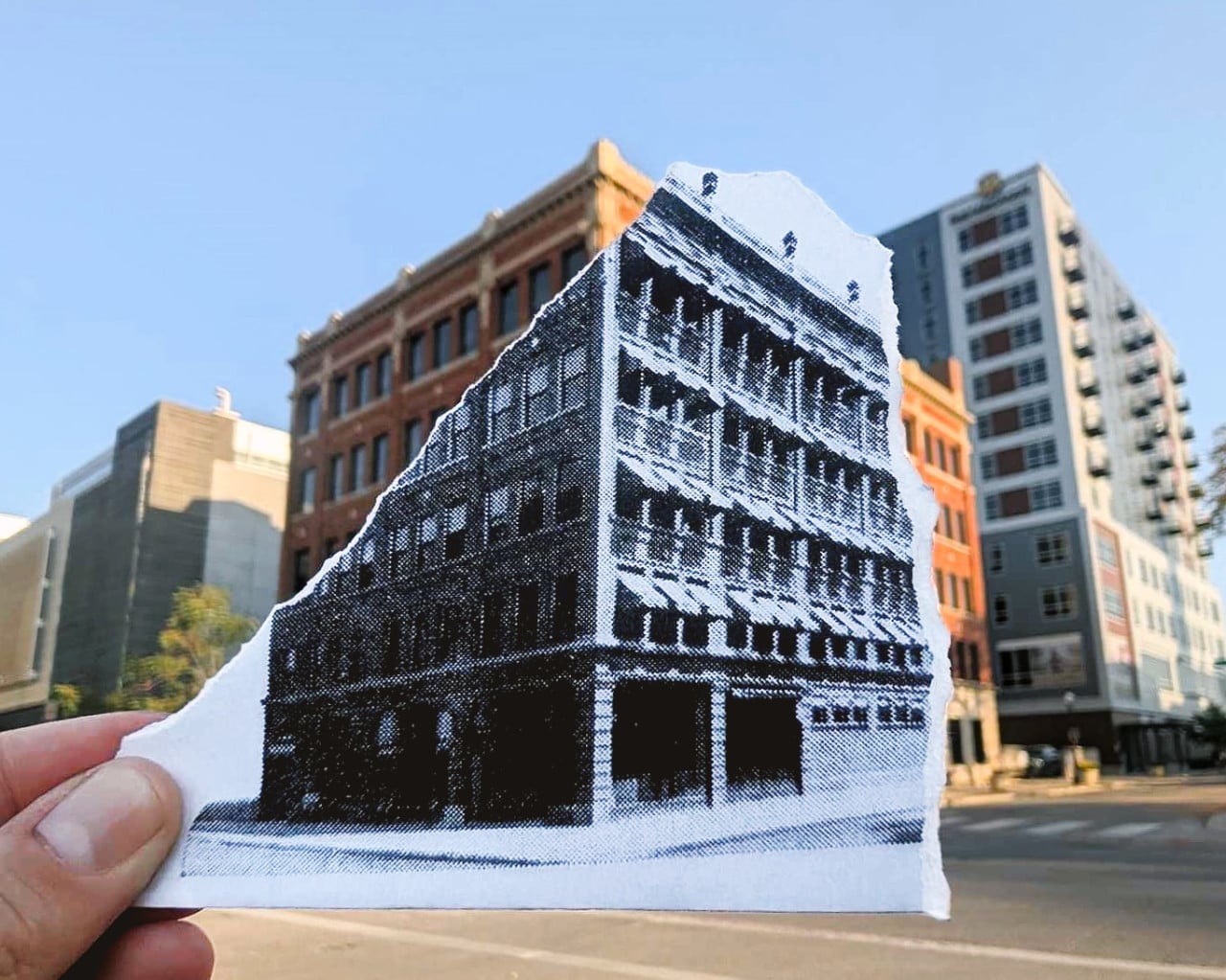
Former Gauntt Building Expands Fort Wayne's Commercial District
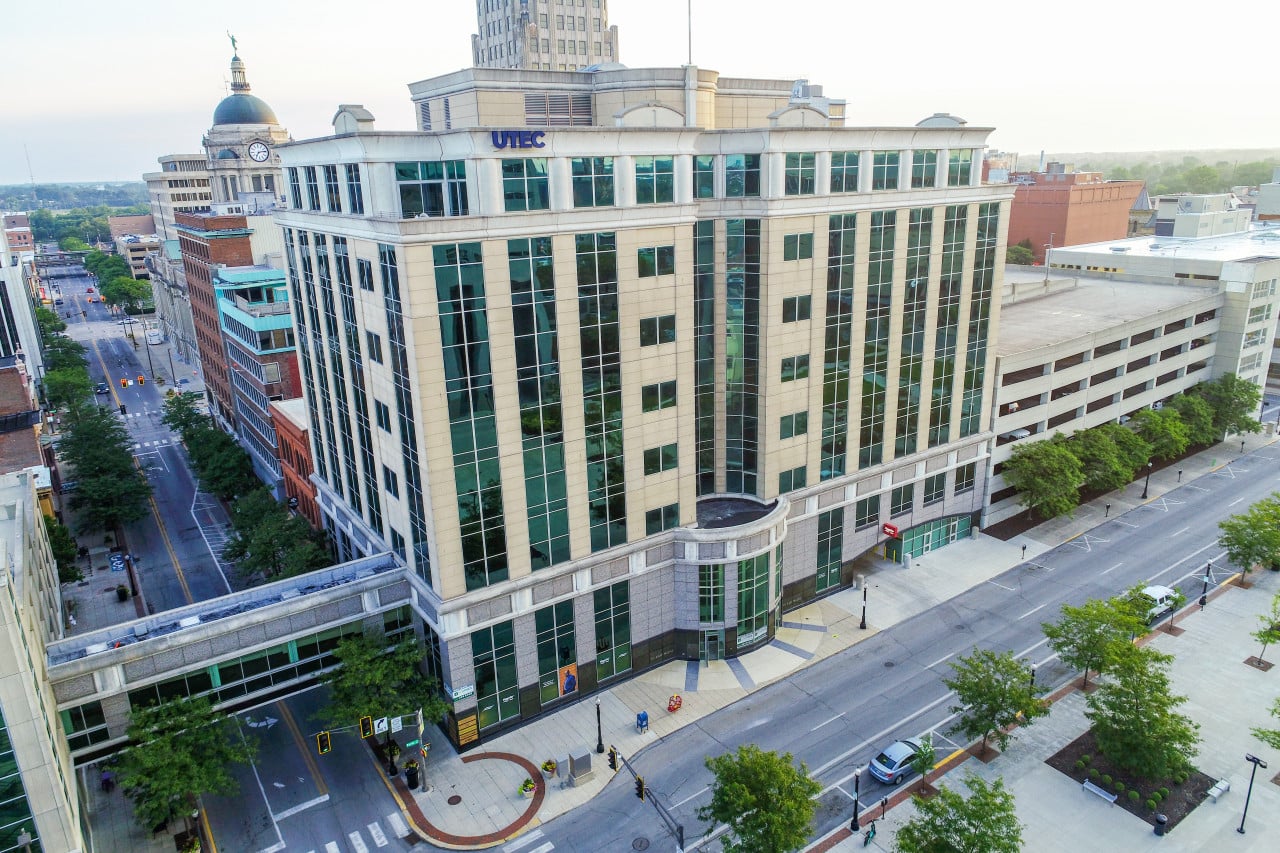
Today, we are visiting 229 West Berry Street, home to a striking piece of early 20th-century Fort Wayne history.
In 1911, a local manufacturer, Forest G. Gauntt, purchased the 65' x 150' southeast corner lot at Berry and Webster for $26,000 with plans to construct a modern 'flat building' for his company.
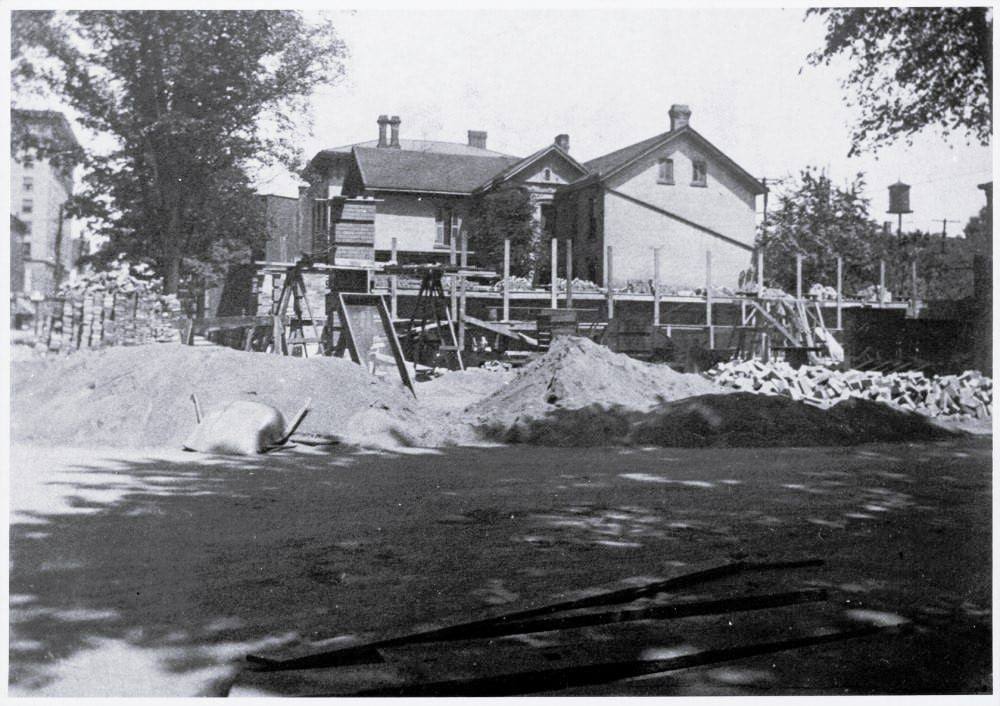
The site previously held one of Fort Wayne's oldest homes, the Chittenden House, dating back to the 1830s. After an attempt to have the 12-room frame house moved or removed, it was eventually razed in June 1913.
Gauntt and Indiana Engineering & Construction began building the ambitious 65' x 94' five-story office building for $100,000—a major investment in 1914!
When it opened in 1915 at only three stories tall, it was already being praised as one of the most modern and completely equipped office buildings in northern Indiana. It featured marble and glass finishes, water to each office, and a grand vestibule leading to an elevator.
Gauntt's building also featured three storefronts on Berry Street, and every office, including the interior upper floors, benefited from abundant natural light via a courtyard.
This new building was also the farthest new office building from Calhoun Street’s central commercial district. It pushed the downtown business district further west along Berry, now running from Webster to Barr Streets, and into prestigious residential neighborhoods.
The building also gained notoriety upon opening for only allowing "professional men' and 'medical practitioners' as tenants. While various physicians leased space into the 70s, the initial concept didn't last long as shoe stores, dressmakers, publishers, and training schools quickly moved in by 1916.
In 1918, Charles Niezer purchased the building for $135,000. That same year, Anthony Wayne Institute moved in, praising the new building's terrazzo floors, mahogany woodwork, and proximity to the business district and one of the city's best residential neighborhoods.
The Medical Protective Company purchased the building in 1919 and completed construction on the 4th and 5th floors in 1920, calling it the Medical Arts Building. After that, 229 W Berry had many names over the decades as various insurance companies and colleges occupied or owned the building. Some may remember it as the Midwestern United Life Insurance Building in the 50s or the Commercial College Building in the 60s.
As downtown Fort Wayne declined in the 70s due to the popularity of suburban expansion, the building also saw many tenants leave, too. By the mid-80s, the entire building was vacant, but in 1986, the building was being rebranded as the Financial Independence Center, drawing new tenants back to downtown.
More than a century later, 229 West Berry stands as a reminder of our city's early vision to expand modern business.
Today, there is one suite available for lease, and Sturges Property Group proudly manages this building as well. Contact Andrew Eckert or John Caffray to learn more about leasing space in this historic building.
(Historic image from 1925 Southside HS yearbook, The Totem, and ACPL.)
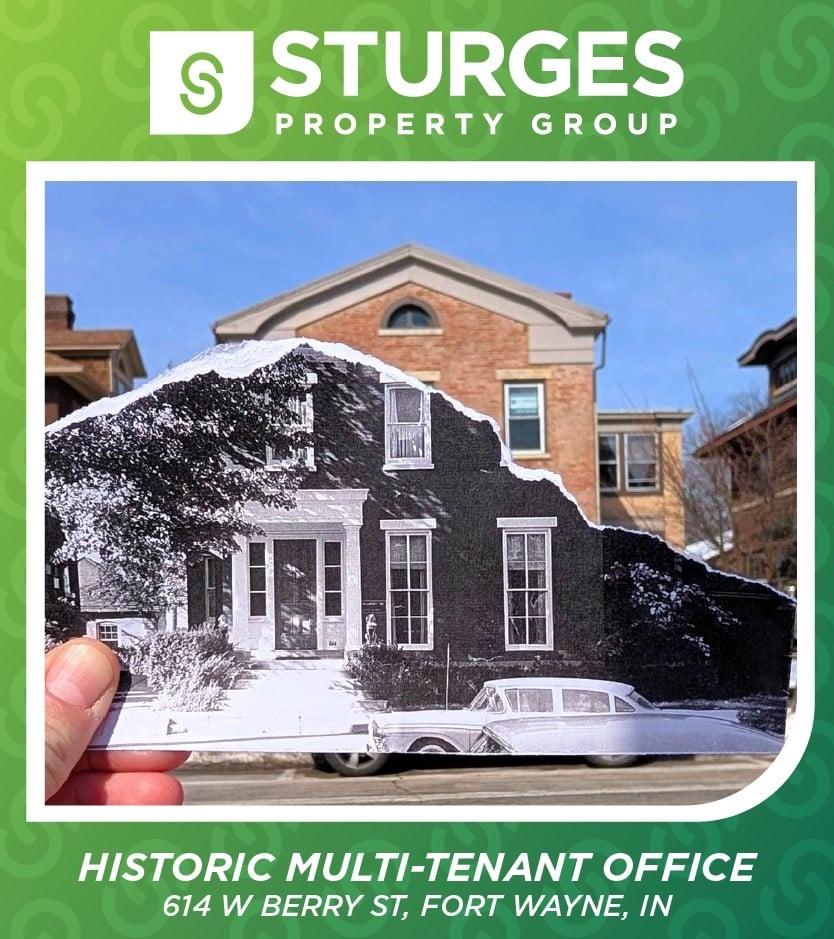
West Central Residence Turns Into Commercial/Office Building
Ever wonder about the past lives of some of Fort Wayne's historic buildings? Let's take a look at this stunning Greek Revival home (now office building) at 614 W Berry Street!
Built between 1850 and 1854 by house and sign painter Peter Ohneck and his wife, Mary, this elegant home has housed some prominent Fort Wayne citizens over the years.
Early residents included E.L. Chittenden, a respected lawyer and city clerk during the Civil War, and Frederick and Charles McCulloch, sons of Hugh McCulloch, former Secretary of the Treasury and one of the country's leading financiers and founders of the national banking system.
In the early 1900s, William and Georgia McKinnie called 614 W Berry home while operating the nearby McKinnie House, a railroad hotel and restaurant.
Throughout the 1900s, the home was a private residence for various families. The most notable would be the Lindsey family, prominent interior designers who lived there between 1948 and 1963.
St. Joseph Hospital eventually purchased the home and used it as office space for St. Joseph's Hospital Foundation. In 2000, the home was purchased by a local citizen who lovingly restored it to its original elegance and converted the home into flexible office and retail space.
The home's outstanding Greek Revival features include a large wrapped cornice, a beautiful semi-circular attic window, and an original wood front door with sidelights. Any additions to the home were done in the same Greek style, with special attention given to match previous designs.
Today, this architectural gem is ready for more commercial and office users to carry on in historic West Central Fort Wayne. Contact our brokers to learn more!
(Historic photo credit: c1962, Lindsey House, Indiana Landmarks, Wilbur D. Peat Collection, ACPL)

Stay in touch with us!
Follow Sturges Property Group on social media to get instant access to new listings, company news, recent transactions, industry headlines, Fort Wayne happenings, sneak peeks, and more. Click your preferred social media outlet below to follow us!